
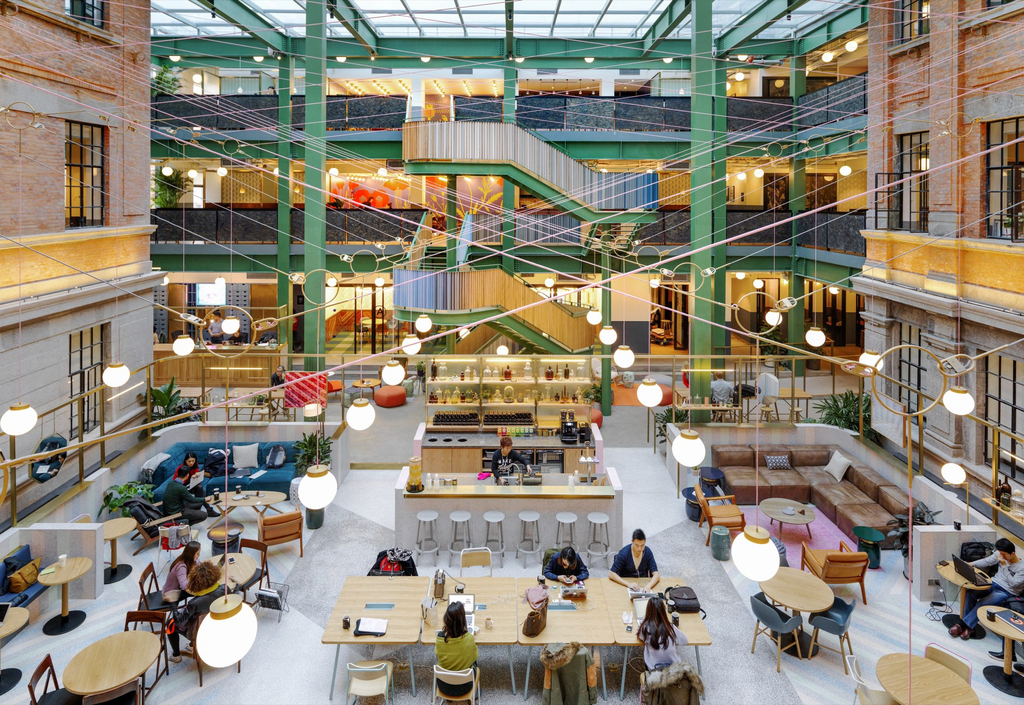
What if some of the buildings we think of as outdated are actually part of the solution to one of real estate’s biggest challenges?
That’s the idea behind adaptive reuse, the practice of taking an existing building and giving it an entirely new purpose. An old warehouse becomes apartments. A vacant school becomes housing. An outdated office building becomes a residential community.
The concept isn’t exactly new, but it has become much more relevant as cities across the country deal with two very different problems at the same time: underused commercial space and a shortage of housing.
A recent article from the National Association of REALTORS® highlighted the potential of adaptive reuse as a way to create housing, preserve existing structures and bring new economic activity to communities. Nearly a year later, the trend is still gaining attention.
The Office-to-Apartment Conversation
The biggest adaptive reuse conversation right now is happening around office buildings.
Remote and hybrid work changed how much office space many companies need, leaving some buildings with high vacancy and an uncertain future. At the same time, communities across the country continue to look for ways to add housing without relying entirely on new construction.
That has created an interesting opportunity.
According to CBRE, the U.S. office conversion pipeline reached approximately 81 million square feet across 44 markets by May 2025. More than 70% of the planned and active conversion space was intended for multifamily housing. Since 2018, office-to-multifamily conversions have already delivered more than 28,500 housing units, with another 43,500 projected from projects in the pipeline at the time of the report.
That’s a meaningful amount of housing, but it also comes with an important caveat: not every empty office building can become apartments.
Why Can’t We Just Turn Every Empty Office Into Housing?
If only it were that easy.
Office buildings and residential buildings are designed very differently. Apartments need windows, natural light, plumbing, kitchens and bathrooms in places that make sense for individual units. Some office buildings have enormous floor plates or layouts that make those changes extremely expensive.
Building codes, zoning requirements, parking requirements and permitting can also create additional hurdles.
Brookings researchers have pointed out that modern office buildings can be particularly difficult to convert because both office design and residential building requirements have evolved over time. What looks like an obvious opportunity from the outside can become a complicated construction and regulatory project once the plans are on paper.
Then there’s the price tag.
Adaptive reuse isn’t necessarily cheaper than building something new. Developers may have to completely rework a building’s plumbing, electrical systems, elevators, windows, HVAC and interior layout.
That means the right building, in the right location, with the right financing, can make all the difference.
There Is Another Benefit: Reusing What We Already Have
There’s also an environmental argument for adaptive reuse.
Instead of demolishing an existing structure and starting from scratch, developers can potentially preserve a significant portion of the building and its materials.
A 2025 study from the Urban Land Institute examined the whole-life carbon impacts of 24 commercial-to-residential conversion projects across 14 states and 18 cities. The research found that successful conversions can provide substantial carbon-mitigation benefits compared with leaving commercial properties unused or constructing new housing from the ground up.
That doesn’t mean every conversion is automatically the greener choice. Renovations can still require substantial new materials and energy. But when a building is a good candidate, reusing the existing structure can offer another reason to consider redevelopment instead of demolition.
Cities Are Getting Creative
One of the biggest factors determining whether adaptive reuse actually happens is what happens at the local level.
Zoning and permitting rules that make sense for a brand-new building don’t always make sense for an existing building being given a completely different purpose.
Some cities are responding by changing those rules.
Washington, D.C., for example, has streamlined certain permitting and zoning processes for commercial-to-residential conversions and has offered tax incentives for projects that include affordable housing. Federal programs have also created additional financing opportunities for certain conversion projects.
New York City has also seen significant conversion activity. A 2025 report from the city’s comptroller identified 44 completed, ongoing or potential office-to-residential projects totaling 15.2 million square feet, representing the potential for approximately 17,400 apartments.
The approaches vary from city to city, but the underlying idea is similar: if an existing building no longer works for its original purpose, it may be worth making it easier to give that building a new one.
What About Tampa Bay?
This is where the conversation gets particularly interesting for us.
Tampa Bay isn’t immune to the changes happening across the commercial real estate market. In fact, Tampa was among the office markets showing positive net absorption in 2025, according to reporting from the National Association of REALTORS®. At the same time, office properties are being evaluated for redevelopment and alternative uses throughout the region.
That doesn’t mean Tampa Bay is about to turn every empty office building into apartments.
But it does mean developers, investors and communities have another option to consider when looking at properties that no longer fit their original purpose.
And adaptive reuse isn’t limited to offices.
Retail centers, warehouses, schools, hotels, churches and other older properties can all potentially find new lives depending on their location, structure and zoning.
We’ve already seen examples of this type of thinking throughout Florida, where changing population patterns and limited land in established communities make redevelopment increasingly important.
What This Means for Real Estate
For buyers and sellers, adaptive reuse is another reminder that a property’s current use isn’t necessarily its highest and best future use.
An outdated commercial building might eventually become housing. A struggling shopping center could be redeveloped. An industrial property could become a mixed-use project.
For investors and developers, that creates opportunities, but it also requires a lot of due diligence. Zoning, environmental conditions, structural feasibility, financing and construction costs can determine whether an exciting redevelopment idea is actually practical.
For communities, adaptive reuse can mean adding housing and activity without always requiring an entirely new development footprint.
And for real estate professionals, it’s another reason to pay attention to what’s happening beyond the traditional single-family market.
Old Buildings, New Possibilities
Adaptive reuse isn’t going to solve the housing shortage by itself, and not every vacant building has a second life waiting to happen.
But the idea is becoming harder to ignore.
As cities grow, work patterns change and housing needs evolve, some of the most interesting real estate opportunities may not be vacant land at all.
They may already be standing.
Sometimes, the next great development isn’t about building something from scratch.
It’s about looking at what we already have and asking what it could become.
Sources: National Association of REALTORS®, CBRE Research, Brookings Metro, Urban Land Institute, Office of the New York City Comptroller and JPMorgan Chase.